Software Architect & CTO | Lead TypeScript · React Developer
I design your architecture, and I make its rules verifiable by machine.
A product to build, or an existing one that has outgrown what it was built for. I answer for what ships — including what the AI produced.
Thirty minutes by video call, free. If the subject calls for a look at your code, that is the one-hour session at €200 excl. VAT — and you keep control of your code: you run the reading script yourself, on your own machine.
Since 2024, the front-end of the congress platform of a surgical medical society. Ten years spent taking over existing systems and designing reusable foundations.
Four formats, depending on where you stand
An hour to place the problem, three days to decide, five days to secure, an engagement to design. They can be taken on their own or in sequence, and each ends with a deliverable that belongs to you.
Is your AI-generated code ready for production?
- Who it is for
Founder, product lead or technical director, with a prototype or a first version that has a threshold to cross.
- Why
To know what in your code will be paid for first — and deal with it before it is.
AI-generated codebase audit: what holds, what has to be redone
- Who it is for
Founder or technical director whose product is already running, and who has to answer to someone — an investor, an enterprise client, a board — for what happens next.
- Why
To cross a threshold — first users, a raise, an enterprise client — knowing what will hold and in what order to act.
Putting the guardrails in: code, deployment, AI agents
- Who it is for
Technical director or team lead whose developers work with AI tools.
- Why
So the rules of your project hold on their own, verified by machine on every change.
Architecture engagement
- Who it is for
Founder or director committing several months of development to structural choices, and who would rather write them down beforehand than discover them afterwards.
- Why
To take the decisions everything else depends on, write them down, and have someone answer for them.
Three systems, and what they make impossible
An architecture is judged on what it makes impossible, rather than on a list of technologies. Here are three, one per system, each with my scope on it.

SFCTCV
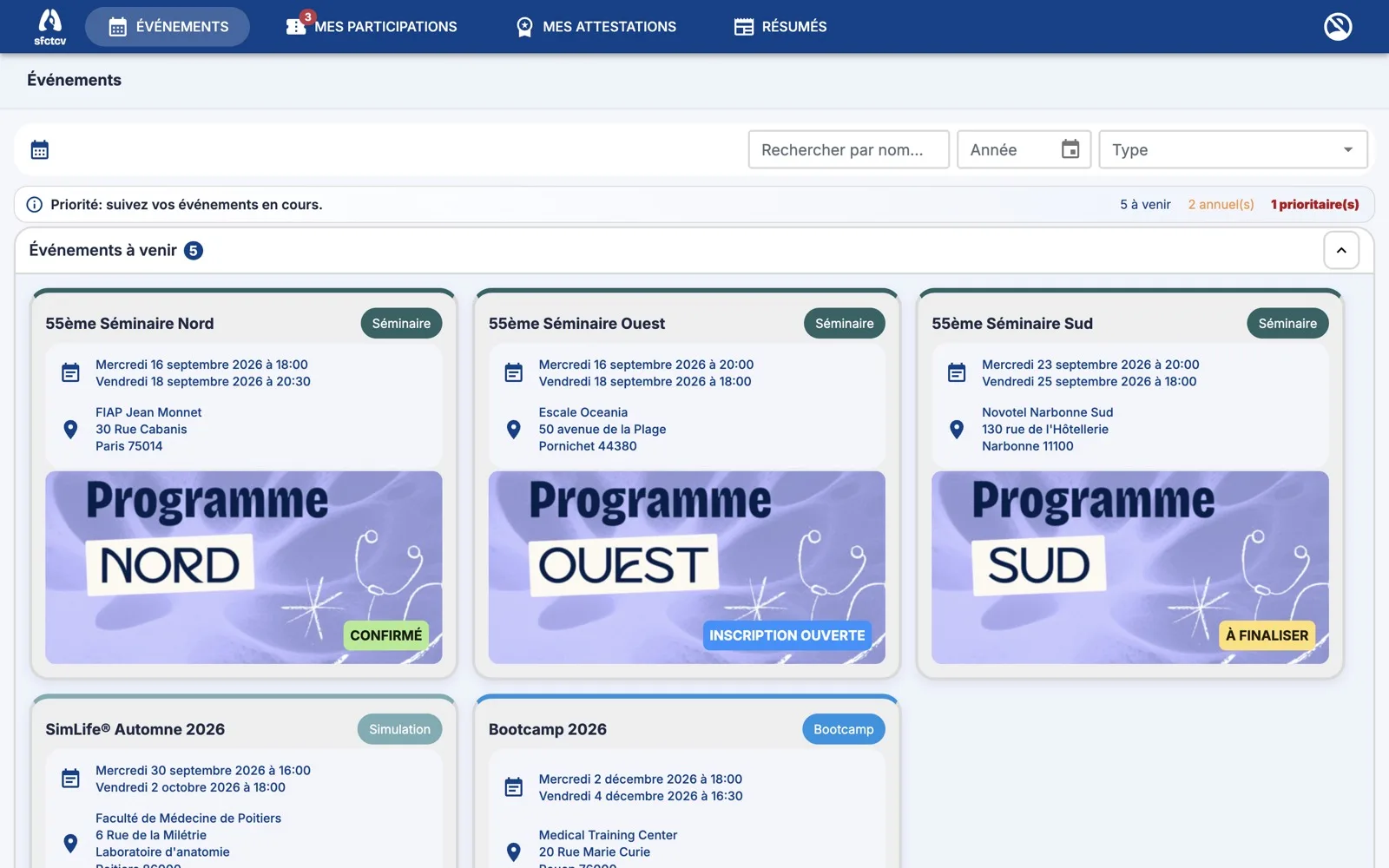
Error reports leave without a session identifier, reduced to five indicators: no name, no address, no medical data. This is not an instruction given to the team, it is what the code is allowed to send.
Read the case study →
Shareadesk
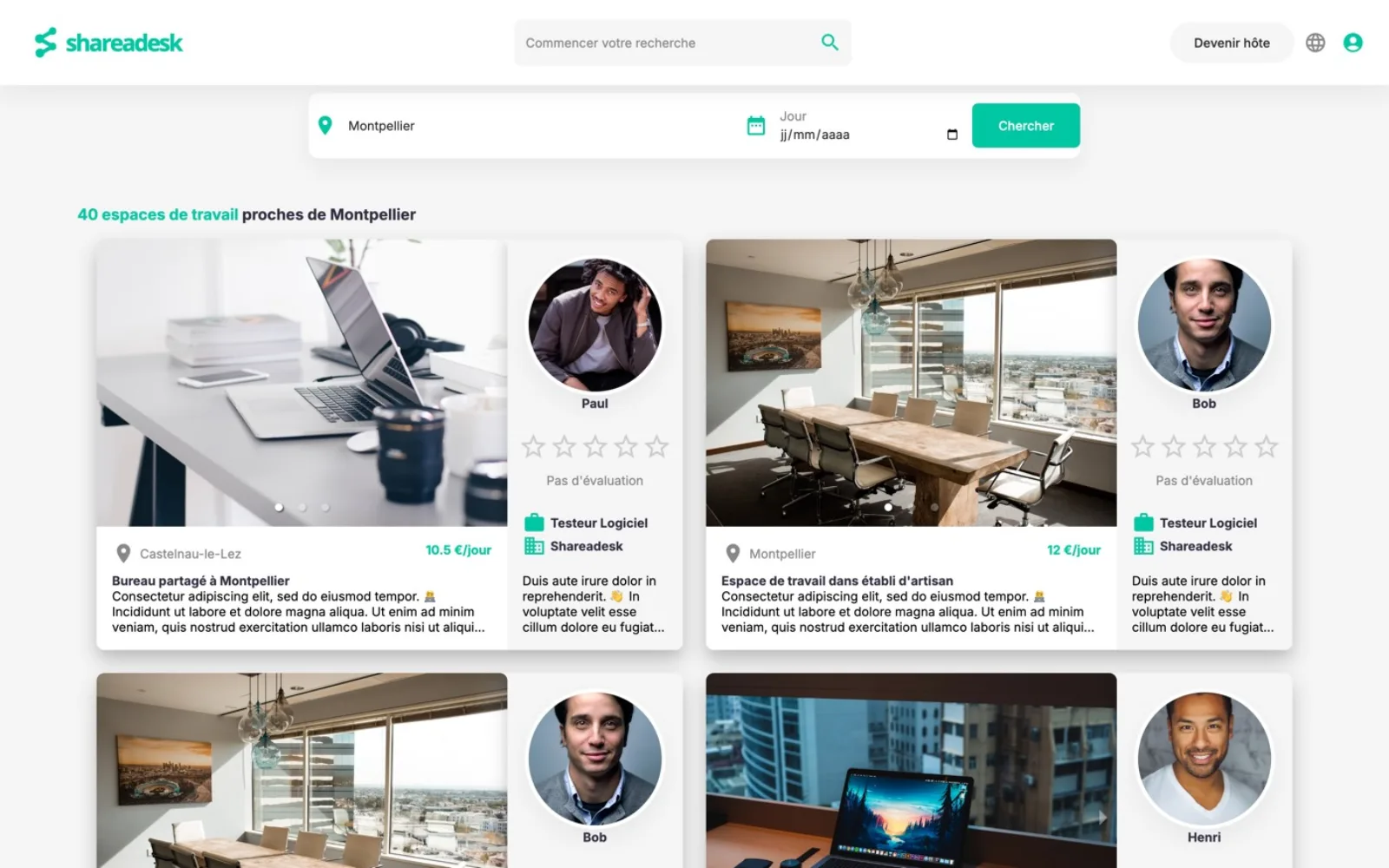
The payment request accepts no amount; it receives only a booking number, and the price is read back from the database. A price that passes through the customer’s screen can be forged: rather than verify it, we refuse to receive it.
Read the case study →
Dal-IA
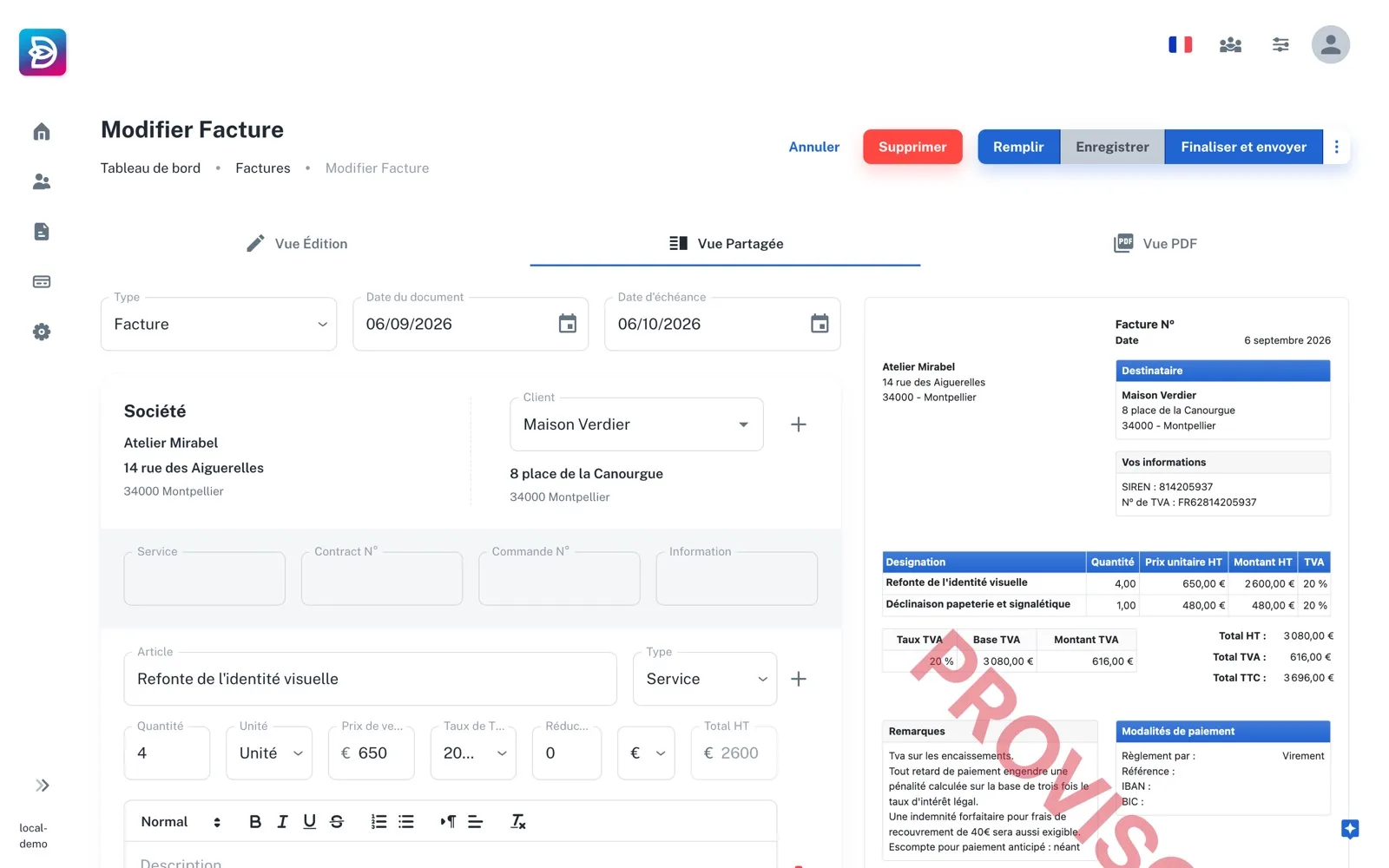
What a language model proposes is never stored as it stands: the proposal is checked against the invoicing rules, the client company verified again in the official register, and nothing is written before a person clicks. I worked inside this architecture without having set it; what I held there was the interface, the format imposed on the model, and the test that audits what it returns.
Read the case study →The method
The rules that protect your product are verified by machine on every change — before release, before your customers.
An internal memo has never stopped anyone doing what it forbids. It is not read at the moment that counts: the moment someone, in good faith and under time pressure, crosses a rule they did not know existed.
Industry settled this problem long ago, and not with instructions. It invented the keyed part: a component shaped so that it cannot be fitted the wrong way round. The plug that goes in one way only, the SIM card with a cut corner. The instruction becomes unnecessary, because the mistake has become impossible.
My work consists of putting keyed parts into software. A rule that matters is not a paragraph in a document: it is something that fails, loudly, the second it is crossed. Before release, before your customers, before the incident.
What is written in a document gets forgotten. What the machine verifies reminds you on its own.
Your teams stop carrying it all in their heads
They no longer have to remember every rule in order to break nothing.
What protects your customers stays when someone leaves
Protection no longer depends on the memory of the person who wrote it: it remains once they are gone.
Your AI tools work inside the frame
Rather than alongside it, with nothing to signal the drift.
What this buys you: being able to keep changing your product without dreading what the change will break elsewhere. A machine produces plausible code — and plausible is exactly the dangerous property: it passes review, and it gives way under real conditions. This is a boundary problem rather than a model problem.
I answer for what ships, including what the AI produced

A hands-on technical director: I make the decisions, and I build them.
With your team when you have one, alone when the product has yet to grow one.
“Do you use AI?” is no longer an interesting question. Everyone uses it, myself first, every day: it has become a prerequisite of the trade, in the same way as the tool that keeps the history of the code. The question that remains open, and that few people are willing to take on, is this one: when the code produced misbehaves, who answers?
The answer is often: nobody. The model commits to nothing. The supplier who ran it commits to little more if all they read is what compiles. And the client discovers the problem on the day it costs something.
I take that place. What I deliver, I have read; I can say why each decision is there; and I answer for its behaviour, whether I wrote it by hand or a machine produced the first draft.
- I deliver nothing I could not explain.
- What matters is protected by a check, rather than by my vigilance.
- There is a company behind this, with a contract, against which what was agreed can be held.
The frame
Design Horizon & Development, a French limited company (SARL). I work remotely from Montpellier, with occasional travel where the engagement warrants it.
To work well together
- A technical decision still open: that is where an architect has the most to bring.
- Access to the project history, to understand the existing choices before proposing others.
- Someone to take over, in time. I can build alone during the engagement; an architecture nobody else ends up understanding dies with whoever set it.
« He took ownership of our challenges with discernment […] all while anticipating our needs and proposing well-informed solutions. »
« Excellent skills in web development, architecture and AI. He brings a genuine product vision centred on UX. »
« Quentin adapted to the architecture very quickly […] Full of initiative, a good communicator. »
Four objections
Do I need an architect, or a developer?
A developer carries out a decision; an architect takes the one the others depend on. You need an architect when a structural choice commits the months that follow — which boundaries, which data, which dependencies, and who answers for what. The cost of a badly set architecture is paid later, in rewrites, in incidents and in features that have become impossible to add, often once nobody remembers the original choice. What we discuss is what there is to do and in what order. If you are unsure, the one-hour session gives you enough to decide.
I would rather not give access to my code. How do you work?
You keep control of your code. For the one-hour session, you are the one who runs a reading program on your own machine. It reads the structure of the project, its dependencies, its configuration files and the history of changes. It does not modify your code, it makes no network calls, and its output appears on your side: you read it before I do. For the three-day audit, read access to your repository makes the work considerably finer; working from an export you prepare remains possible, and a confidentiality agreement signed before the first minute poses me no difficulty. This reluctance is rather a good sign: a director who hesitates to open their code to a stranger has already understood something.
Do you work remotely?
Yes, that is my usual way of working. Architecture is decided in writing: a document that gets read back, a rule a machine verifies, a dated decision with its reasoning. These objects outlive the meeting that produced them. A decision taken out loud, between people who agree at the time, leaves nothing to whoever arrives six months later. I work from Montpellier for clients who are elsewhere, and I travel within France for a framing workshop or a presentation of findings when the meeting warrants it — counted in engagement days, with no disguised surcharge.
My project is not in TypeScript. Can you still step in?
Yes. What carries across from one language to another are the separations: which rules your system must guarantee, where they are verified, and what happens when someone crosses them. That reasoning holds in Python, Go, PHP or Ruby, and I have worked on languages other than my own. My strongest expertise is Node.js and TypeScript: that is where I commit without reservation, and on an audit in another ecosystem I distinguish in the report what I read with certainty from what I read with reservation. For a long-running engagement on another technology, the right arrangement is with a counterpart in your team who practises it daily — and I would rather tell you that now.
Thirty minutes to lay out your situation and leave with a direction
We talk about your context, what you are trying to do, and what is on your mind. You leave with a clear reading of your situation and the next step that matches it.
Thirty minutes to lay out your situation and leave with a direction
Reply within 24 hours. No commitment required.
Calls, documents and reports in English or French.
This site measures its traffic without cookies and without storing any identifier on your device; “Refuse” stops that measurement. With your consent, we also enable the Calendly scheduling module, which sets its own cookies. You can change your mind at any time from the footer. Learn more